Cultural Significance of the Mridangam
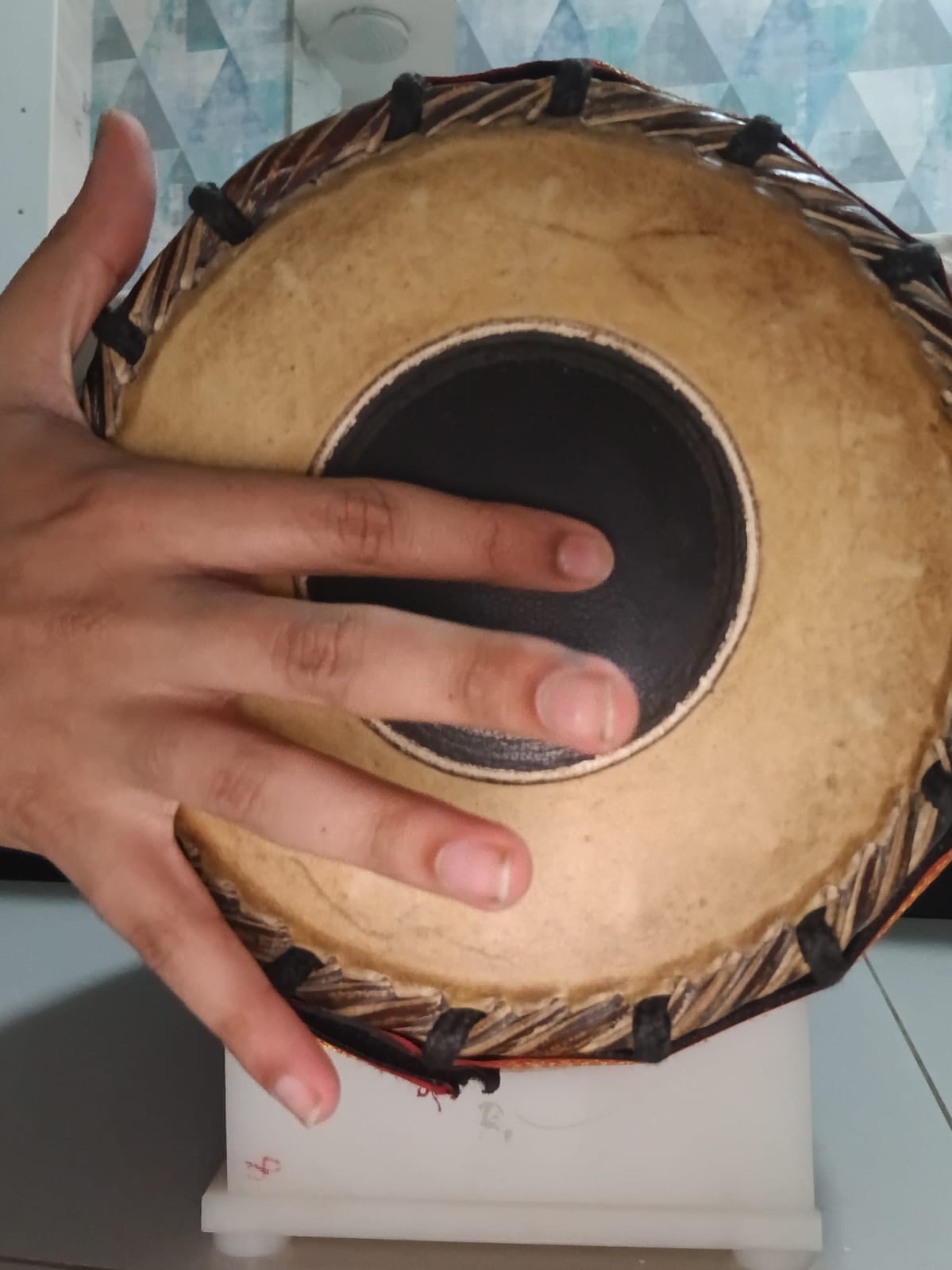
The mridangam occupies a sacred position in South Indian culture, serving not only as a musical instrument but also as a spiritual medium. In Carnatic tradition, rhythm (laya) is considered foundational, reflected in the saying “Shruti Mata, Laya Pita”. The mridangam is therefore seen as the rhythmic anchor that sustains both music and movement.

Spiritually, the mridangam is closely associated with temple rituals, devotional concerts, and classical dance forms such as Bharatanatyam and Kuchipudi. It is believed that the vibrations produced by the instrument aid concentration, discipline, and meditative awareness for both performer and listener.
Culturally, the mridangam embodies a rare balance between power and subtlety. Unlike other percussion traditions where techniques are divided across instruments, the mridangam retains both forceful and delicate expressions within a single instrument. This balance is deeply connected to its role in accompanying both expressive dance and intricate melodic improvisation.
Fingering Techniques
Left-Hand Techniques
The stroke thom is played using the middle, ring, and little fingers held together, producing a deep and rounded bass tone.
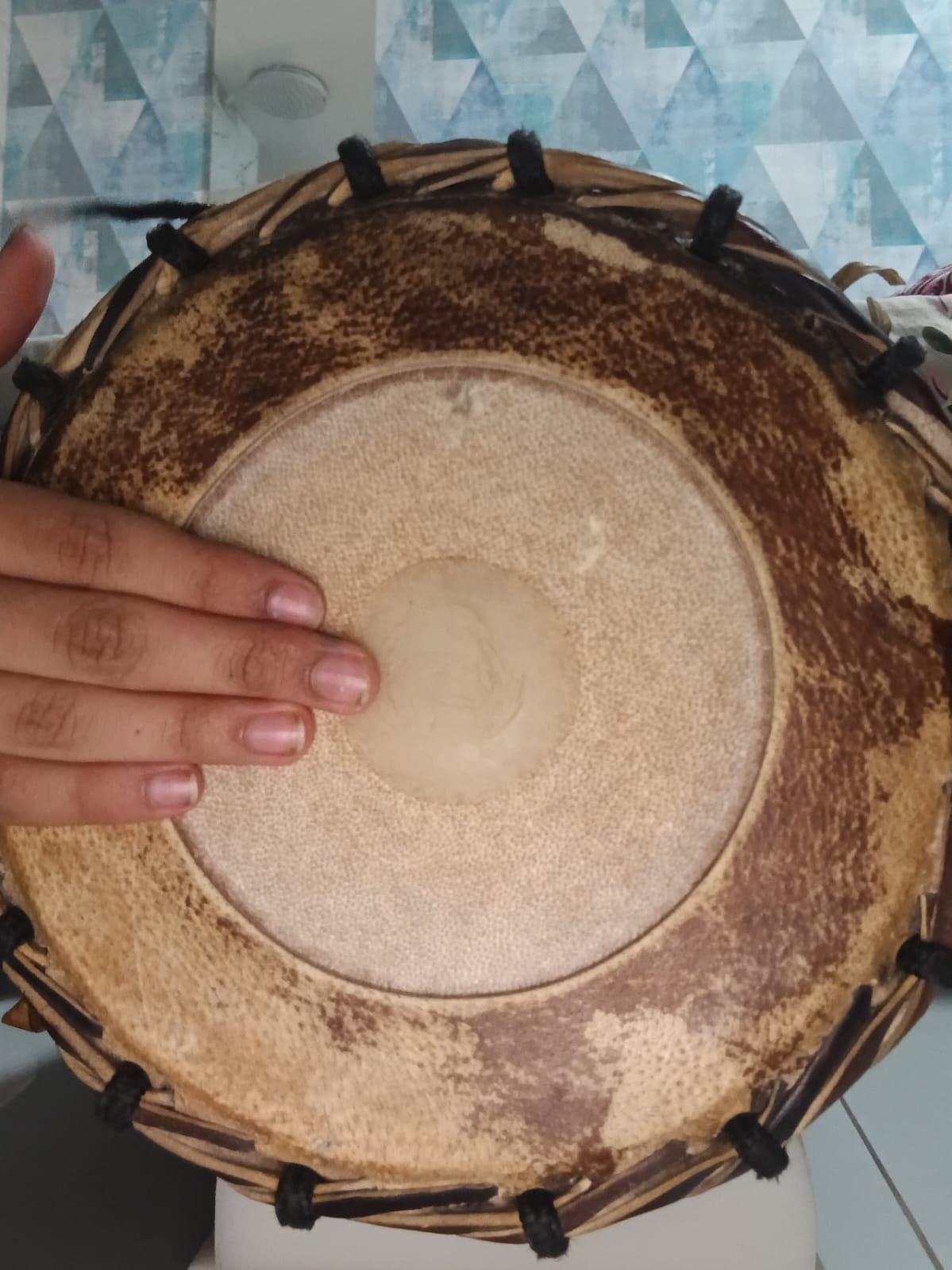
Gumki is a specialized technique played in place of thom, using the lower part of the palm along with the middle and index fingers. This technique produces a subtle pitch modulation and is used for expressive phrasing.
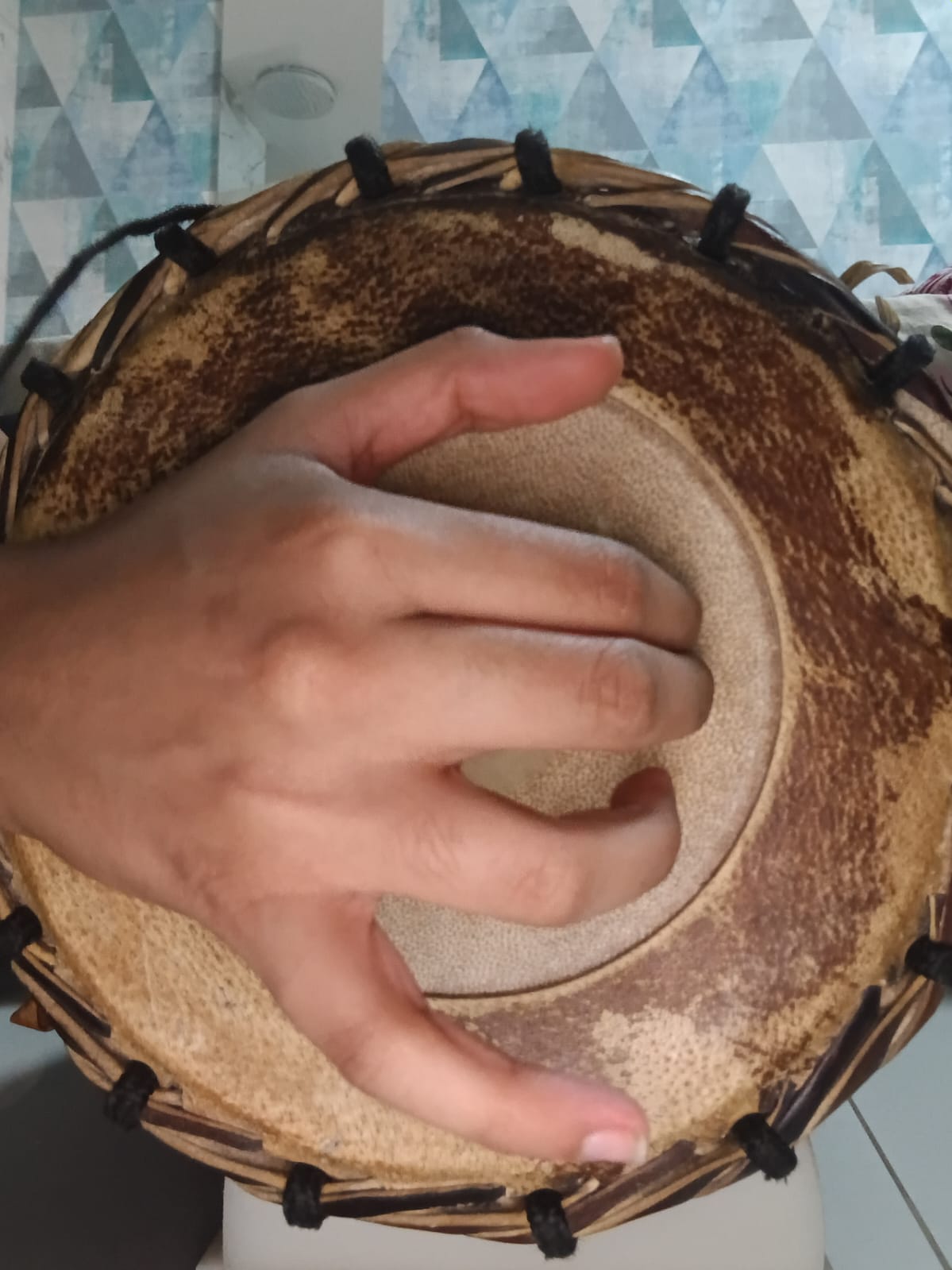
The stroke tha is performed using all four fingers excluding the thumb, held together to create a sharp and controlled bass articulation.
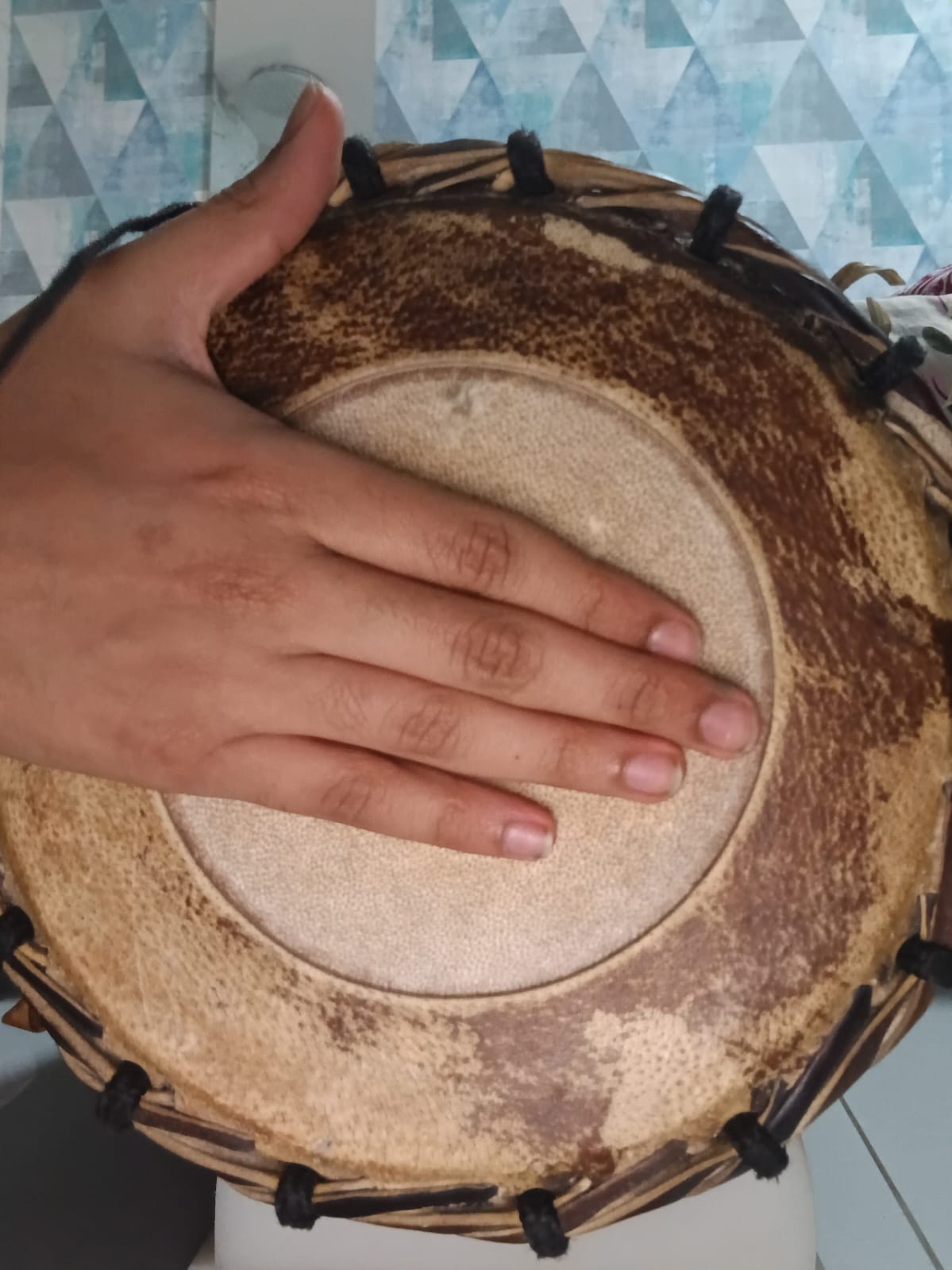
Right-Hand Techniques
For strokes like nam and dhim, the index finger strikes the membrane while the ring finger remains positioned between the outer rim and the central black patch, ensuring tonal clarity and control.
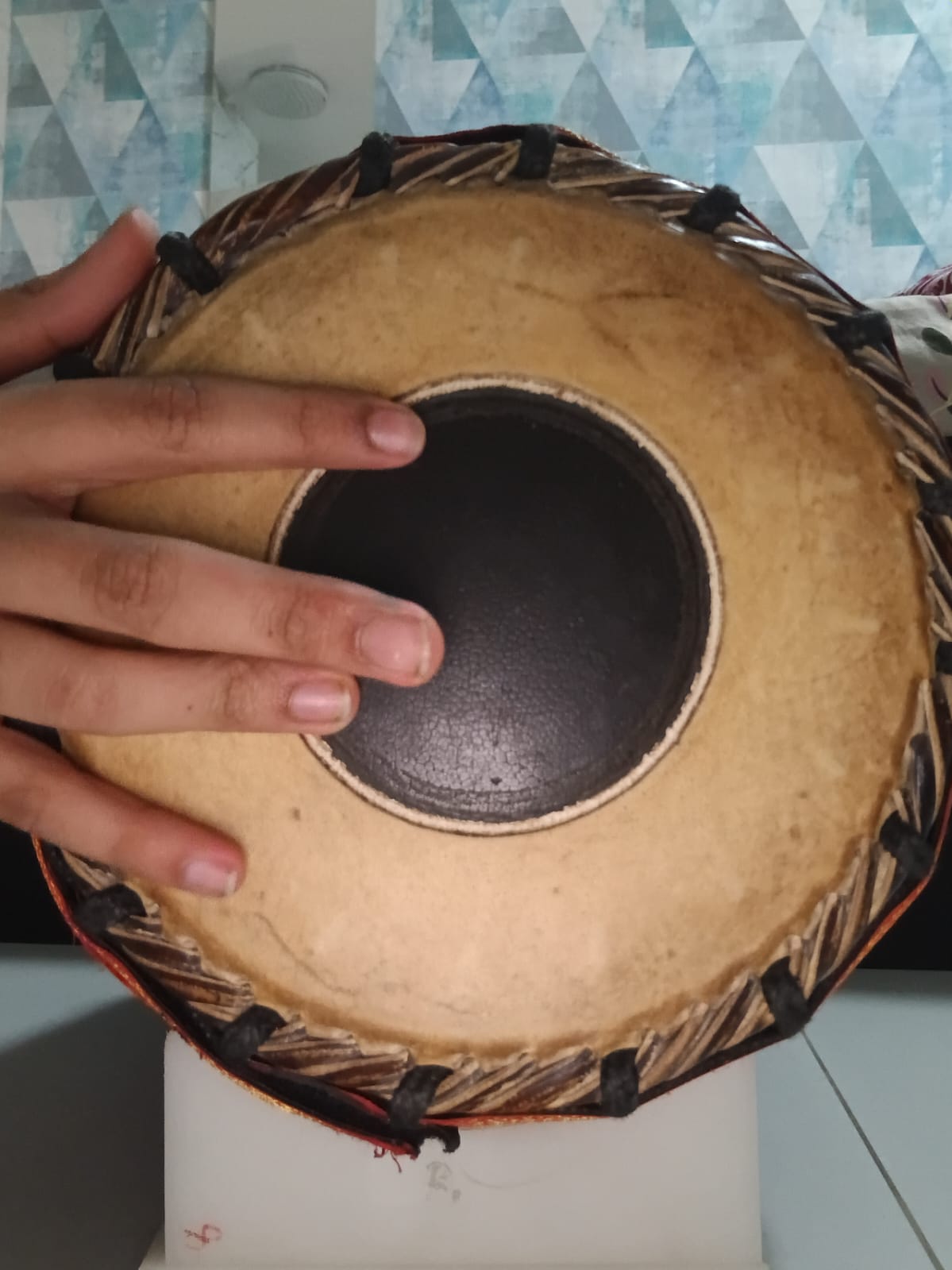
The stroke thi is executed using the middle, ring, and little fingers held together at the center of the black area. This grouping is also maintained for strokes such as jham, producing a focused and harmonically rich sound.
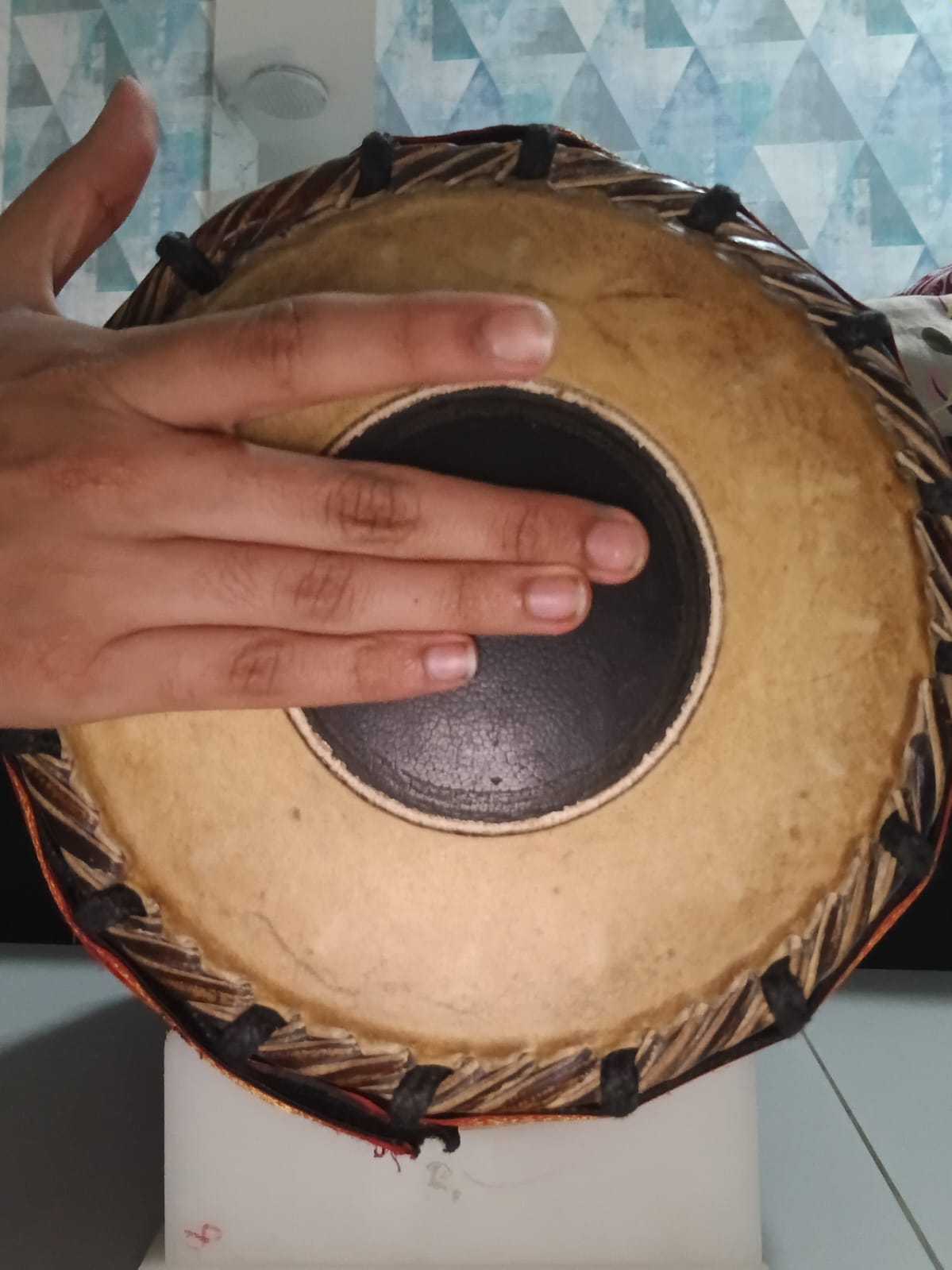
The stroke ta is produced using only the index finger at the center of the black patch, allowing for sharp articulation and rhythmic precision.